
Fairfield Previous Residents Sources
A Fairfield address leaves different traces in different record systems. The assessor identifies a parcel and its fiscal record, the Fairfield Town Clerk holds local land instruments, a directory lists a name at a date, and a newspaper or probate file adds family context. The table keeps those roles apart so a search for previous residents does not turn one source into a claim it cannot support.
Fairfield coverage dates are not equally strong. Some are exact portal ranges, some are Fairfield holdings spans, and some are research gaps that need a request to the custodian.
| Source | Years it covers | Where held | What it shows |
|---|---|---|---|
| Fairfield land records | Jan. 3, 1977-present; index books 1948-1977 and 1929-1947 | Town Clerk and SearchIQS | Grantor, grantee, date, document, book/page, and images when available |
| Fairfield record books, land records | Mar. 17, 1961-Jan. 13, 1977 | SearchIQS image records and Town Clerk | Recorded instruments where an image is available |
| Bridgeport city directories and Fairfield property files | 1855-1979 | Fairfield Museum research library | Names by street, property context, atlases, tax files, and photographs |
| Fairfield regional directory scans | 1909 and 1971 | FamilySearch digital books | Printed names and listed addresses in regional volumes |
| Fairfield federal census | Released schedules through 1950 | NARA, Ancestry, and HeritageQuest | Household members, street, age, birthplace, and relationships |
| Fairfield Citizen obituary index | 1982; 1985-1986; 1988-2006, with gaps | Fairfield Public Library and Main Library microfilm | Publication date, page, death date, names, aka, and notes |
| Fairfield probate records | Jan. 5, 2011-present current data; 1648-1757 older catalog | Fairfield Probate PD-49 and FamilySearch | Estate, trust, fiduciary, case, and early family leads |
| Fairfield building and permit records | Online route from Mar. 1, 2022; full historic export not located | Fairfield Building Department, City Squared, or FOI | Address activity and project records when released |
Start with the Fairfield source that matches the question. Use land records for a transfer, directories for a listed name, census pages for a household snapshot, and the Museum for a house file. A missing online result should move the search to the counter, microfilm, catalog, or written request rather than to an invented date.
Fairfield Previous Residents Across Four Eras
Fairfield's history changes the meaning of an old address. The town was founded in 1639, its original Fairfield territory later gave rise to Easton, Weston, Redding, Westport, and part of Bridgeport, and the British burned Fairfield on July 7, 1779. That fire belongs in the local story, but it does not prove that a particular deed, ledger, or house file was lost.
| Era | Best sources | What they can reveal | Boundary caution |
|---|---|---|---|
| Fairfield 1639-1779 | Town land books, probate, church records, Jacobus, State Library | Early families, land transfers, settlement, and the original town extent | An old Fairfield reference may fall in a later town |
| Fairfield 1779-mid-1800s | Town records, probate, deeds, maps, and local histories | Rebuilding, family continuity, roads, and early property descriptions | Handwritten descriptions and former place names need care |
| Fairfield 1855-1979 | Regional directories, atlases, tax files, telephone books, Museum files | Street names, listed residents, address continuity, and house context | Regional volumes may group Fairfield with Southport or Bridgeport |
| Fairfield 1900s-present | Assessment cards, aerials, GIS, permits, deeds, newspapers | Parcel change, additions, rebuilding, ownership, and neighborhood context | A current fiscal or map record is not a complete address history |
The four eras are a way to choose a source, not a promise that one record set crosses every boundary. Preserve the original Fairfield place name and Fairfield jurisdiction used by the record.
Fairfield Previous Residents and the 1638 Land Ledger
The Fairfield Town Clerk record history preserves the 1638 General Court instruction that towns keep a ledger and register land, with bargains and mortgages not valid until registered. Fairfield was founded the next year. That connection gives a modern Fairfield deed search a local starting point, while the actual chain still depends on the surviving index, image, book, and page.
Early jurisdiction is just as important. The Fairfield probate district covered the whole county until 1728, and the first Connecticut county organization dates to 1666. An early Fairfield probate or land reference can therefore reach beyond today's town line. Compare the place label with the date, family, church, and neighboring land description before assigning it to a present parcel.
The State Library history and genealogy guide helps route Fairfield older questions to probate districts, town documents, census records, directories, courts, and vital records. It also notes that local libraries and historical societies fill gaps when town reports or off-site records are not immediately available.
Tracing Fairfield Previous Residents Through Deeds
For a current Fairfield parcel, begin with the assessor card and copy the Fairfield map and lot, account or PID, owner, mailing address, sales history, and legal description. The assessor record is a fiscal snapshot. Use its legal description or parcel identity to make a more reliable SearchIQS query because the land-record index is not a guaranteed address index.
The Fairfield land-record search is available through SearchIQS. Current help describes Party 1 and Party 2, last, first, or company names, date From and Thru, document group and description, town, book and page, instrument number, and case number. A wildcard can broaden a name. Results may offer View, an image marker, View Selected, Names Summary, and My Documents. Keep the Fairfield SearchIQS fields with the query date.
The SearchIQS search-screen field reference shows the grantor, grantee, date, document, town, and book/page controls used to work backward from a known Fairfield parcel.
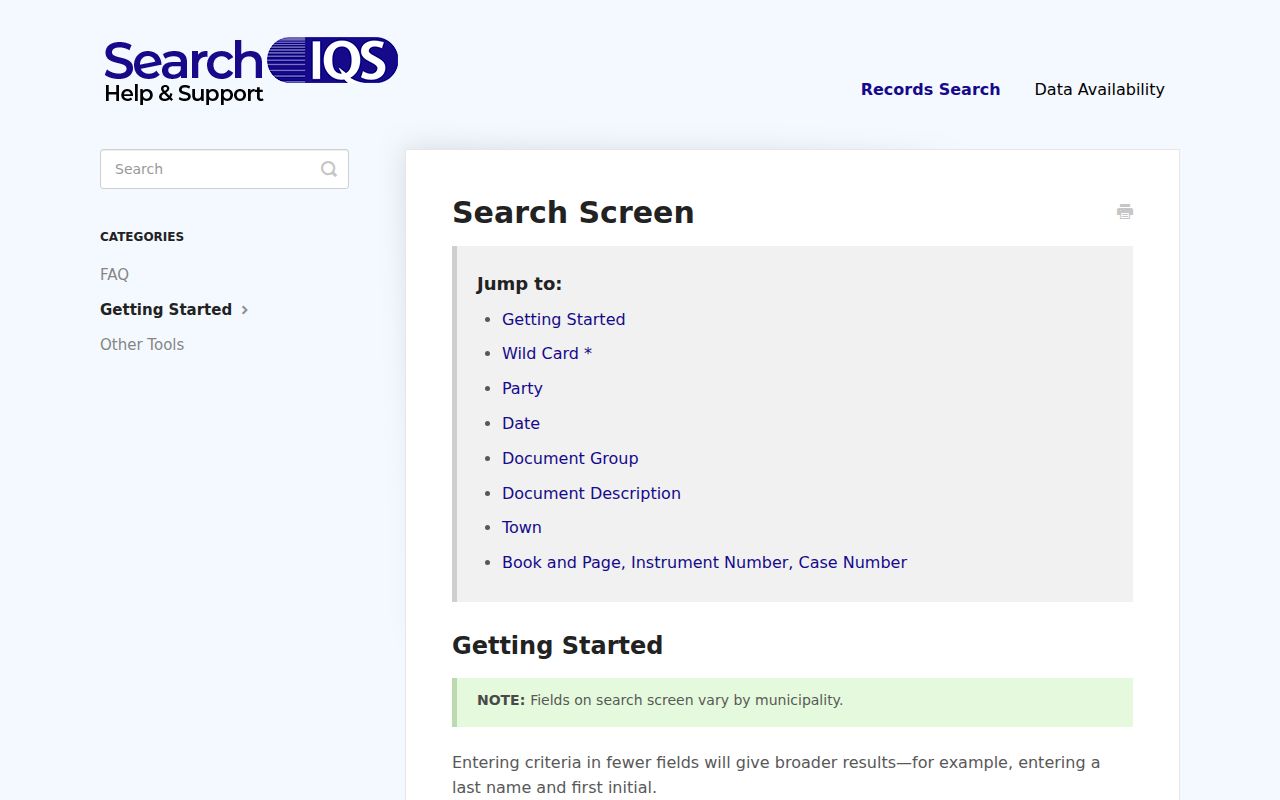
These fields support a dated Fairfield instrument trail, not a direct list of who lived at the Fairfield address. Read the recorded image when available and keep the instrument type beside the party names.
- Find the current parcel in the assessor system and copy the map and lot or legal description.
- Search the current owner or party in SearchIQS, then narrow by date and document description.
- Open the result and compare its instrument, book, and page with the assessor sale or history fields.
- Use the earlier grantor as the next search name, then repeat until the index or image range ends.
- Ask the Town Clerk about older books, certifications, or records not available through the online image path.
| Fairfield Grantor | The party transferring an interest in the recorded instrument. |
|---|---|
| Fairfield Grantee | The party receiving the interest named in that instrument. |
| Fairfield Chain of title | A dated sequence of recorded transfers connected by the parcel's legal identity. |
| Fairfield Legal description | The land description used in the instrument, often more stable than an old street label. |
| Fairfield Situs address | The address assigned to the parcel location, which may differ from a party's mailing address. |
Fairfield SearchIQS guest searching is free, while image, download, and print access can require an account or payment. The subscription material lists $2 per image for download or print. Current help lists Fairfield land-record coverage from January 3, 1977 forward and older index books, while an older PDF gives conflicting date boundaries. Use the current help as the first guide and ask the Fairfield Town Clerk when the dates matter.
Fairfield House-History Sources for Previous Residents
The Fairfield Museum houses and property collection brings together atlases, tax records, property files, historic-preservation surveys, photographs, some land and probate material, and Bridgeport city directories that include Fairfield from 1855-1979. Send the current number, street name, alternate historical spelling, approximate date, and known owner. A rich file is possible, but no complete file is guaranteed for every parcel.
The Fairfield Museum's research library is at 370 Beach Road, 203-259-1598, Wednesday through Saturday from 10 AM to 4 PM by appointment. The visit page lists a member-free, adult $5, and senior or student $3 fee schedule, which should be verified before Fairfield travel. In-person catalog help is an access channel, not a sign that every item is digitized.
The Fairfield property research source gives a practical way to ask about a Fairfield address without claiming a title chain. It can point to an atlas sheet, photograph, tax reference, survey, or directory year that deserves a closer look.
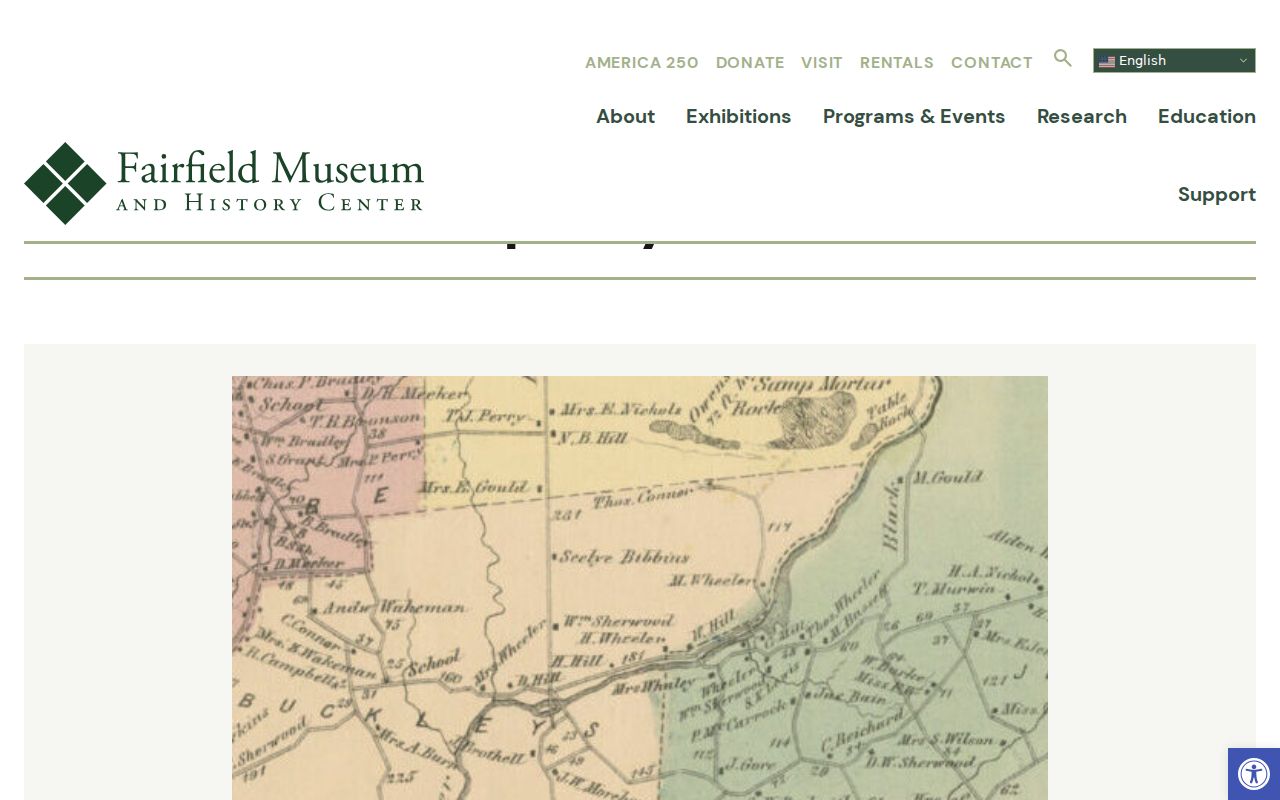
A Fairfield house-history image is best used as a lead to a dated item. Match it to a Fairfield parcel, map, directory, or deed before treating the picture or file note as evidence of a particular resident.
The State Library report identifies Fairfield aerial photographs from 1931-1933, with 13 folders and six negatives from the Conservation Department. The Library of Congress 1877 Bridgeport and Fairfield map adds land-ownership context and a Mountain Grove Cemetery inset. Neither source is a complete parcel history, but each can help place an old Fairfield address in its landscape.
Fairfield Address Names and Place Changes
Historical address work fails when a current Fairfield street label is treated as the only key. Southport, Greens Farms, Greenfield Hill, Stratfield, Fairfield Beach, Mill Plain, and other local names may appear in directories, maps, newspapers, or postal records. Fairfield's earlier territory also included land later assigned to Easton, Weston, Redding, Westport, and part of Bridgeport.
Keep three Fairfield address keys beside every previous-resident note:
- Contemporary situs: the number, street, town, and ZIP used for the current parcel.
- Parcel identity: the map, block, lot, unit, account, PID, or GIS identifier that can connect records despite a name change.
- Historical identity: the former street or place name, directory spelling, map reference, and earlier lot description.
Fairfield USPS can confirm a deliverable address and ZIP association, but not ownership or residence. An assessor can show a Fairfield mailing address, but a mailing address is not proof that the named owner lived at the parcel. If a street number changes, compare the deed description, old and current cards, GIS parcel ID, directory year, postal record, permit date, and neighborhood source.
When a Fairfield parcel splits or merges, preserve the former lot identifiers. A stable Fairfield parcel key can connect a prior record even when the number changes, while a new lot may require a separate branch in the chain.
Fairfield Previous Residents in Directories and Census
Fairfield deeds show recorded parties. Regional city directories and census schedules answer a different question about who was listed at an address or counted in a household. The Fairfield Museum identifies Bridgeport directories from 1855-1979, while the 1909 and 1971 FamilySearch scans show how Fairfield names can sit inside a regional Bridgeport title. No official Fairfield-specific reverse directory run was located, so an address search should ask the Museum for catalog coverage and use the street or address sections that actually survive.
The collections and reading method for those regional volumes are described on the Fairfield city directory page. Keep its publication title, page, place heading, and Fairfield address beside each extracted name. A directory listing is a dated lead, not title proof and not a full account of everyone connected to a parcel.
Federal census schedules released through 1950 can add Fairfield household members, age, birthplace, relationships, and street information. The NARA census overview, Ancestry Library Edition, and HeritageQuest offer different access paths. Fairfield enumeration boundaries and spelling can vary, so pair the page with the directory date instead of treating a one-year mismatch as a contradiction.
A practical Fairfield pairing sequence is:
- Choose the nearest available directory year and save its page and address line.
- Check the closest released census year, then compare street, household, age, and relationship fields.
- Test the next directory year and search the place label under Fairfield, Bridgeport, Southport, or a known neighborhood.
- Use a newspaper, death index, deed, or probate record to explain a move or a break in the name trail.
Fairfield Previous Residents in 1909 and 1971 Scans
The 1909 Bridgeport directory scan is 832 pages and names Stratford, Fairfield, and Southport in its title. Its regional scope is useful when a modern search for a Fairfield-only volume comes up empty. A later 1971 FamilySearch scan is 1,570 pages and follows the same broad regional pattern.
Use the two Fairfield scans as dated page sources. Record the name, street line, page, title, and Fairfield place heading exactly as printed. Do not infer title, residence beyond the listed entry, or a continuous presence from a single page. If a 1909 name is absent in 1971, look for another edition, a spelling variant, a newspaper, or a family record before drawing a conclusion.
The scan years also show why Fairfield previous residents work needs more than one record type. A directory places a name in a printed sequence, while a deed places parties in a recorded Fairfield transfer and a census places a household in an enumeration.
Fairfield Previous Residents in Obituary and Probate Records
The Fairfield Citizen obituary index includes publication date, page, death date, first, middle, maiden, and last name, an "aka" field, and notes. Its format changes by year: the database covers 2001-2006, PDF indexes cover 1995-2000, manual indexes cover 1988-1994 and 1985-1986, 1987 is unavailable, 1983-1984 are unavailable, and a searchable table covers 1982. Main Library microfilm holds the articles, and printing is listed at $0.10 per page.
The Fairfield obituary page is a trail endpoint, not a complete name or address register. Read the newspaper page, note its date, and compare any relationship or residence detail with a directory, deed, census, or probate record. A gap in the index is a gap in that access path, not proof that no notice existed.
The Connecticut Probate case lookup provides current listed case types and districts, including Fairfield PD-49. Its listed data begins January 5, 2011 for the covered case types, while the FamilySearch catalog holds an older Fairfield probate collection for 1648-1757. The old district covered all of Fairfield County until 1728, so an early entry may describe a much wider region than today's town.
The Fairfield obituary index's visible year gaps make the limits of a negative search easier to see.
Pair the Fairfield index with the newspaper page or a library-held microfilm frame. Keep the source format, date, and page with the address trail.
Build a Fairfield Previous Residents Timeline
A final address history should show which source supplied each line. Building records can add a dated project clue, but Fairfield does not have a verified complete public permit export. The Fairfield Building Department is at Sullivan Independence Hall, 725 Old Post Road, second floor, with counter hours from 8:30-10:30 AM and 3:30-4:30 PM, office hours 8:30 AM-4:30 PM, and phone 203-256-3036.
Fairfield says City Squared online permitting began March 1, 2022 and routes Plan & Zoning, Conservation, Building, Engineering, and Sewer applications. The live portal was not crawler-readable, and the public page does not establish a complete address search. For an identifiable record, use the department's counter or a written Connecticut Freedom of Information request. Requests may be made in any written format, with inspection promptly during regular hours subject to exemptions and practical handling.
- Write the current parcel key and the earliest confirmed date at the top of the work sheet.
- Add each deed, directory, census, map, obituary, probate, tax, or permit item with its source date and page.
- Mark the role shown by the record: owner, grantor, grantee, listed resident, household member, or newspaper subject.
- Keep address changes and place names in a separate column so a later town label is not mistaken for a new parcel.
- Leave an open gap when the custodian or catalog has not confirmed the next link.
House-history use. Fairfield previous-resident research is appropriate for family history, genealogy, property history, and personal curiosity. Do not use a record trail to stalk, harass, track, or harm a living person.
A careful Fairfield timeline can be incomplete and still be useful. The strongest result is a dated chain that states what each record shows, where it came from, and what remains unconfirmed.